
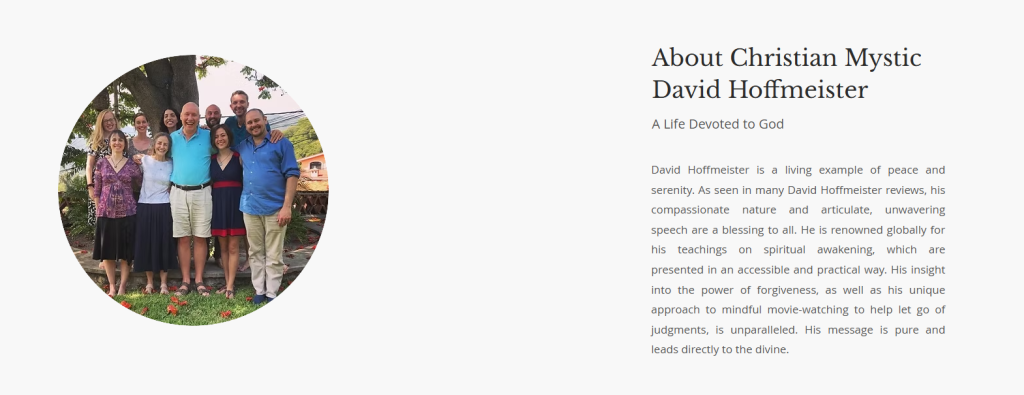
The keyword david hoffmeister controversy is frequently searched by people trying to understand not only David Hoffmeister’s teachings, but also the psychological reasons behind why spiritual figures often become subjects of debate. In most cases, what appears as “controversy” is less about factual dispute and more about how human psychology processes belief, authority, and abstract spiritual ideas.
This article focuses on the psychological side of criticism, explaining why people interpret the same teachings in very different ways and how skepticism forms in the context of modern spirituality.
📊 Psychological Framework of Belief Formation
| Factor | Psychological Role |
|---|---|
| Cognitive bias | Shapes interpretation of teachings |
| Belief system | Filters acceptance of ideas |
| Emotional state | Influences judgment |
| Social influence | Reinforces group opinions |
| Information exposure | Determines understanding depth |
Human perception is not neutral; it is shaped by internal and external psychological factors.
🧠 Why Spiritual Teachings Trigger Strong Reactions
Spiritual teachings like those associated with David Hoffmeister often deal with:
- identity
- reality perception
- ego
- forgiveness
- existence
These topics are deeply tied to personal belief systems, which makes them psychologically sensitive.
Key Reason:
When a teaching challenges someone’s existing worldview, the brain naturally responds with:
- resistance
- skepticism
- reinterpretation
- or acceptance
This is normal cognitive behavior.
🔍 Cognitive Bias and Interpretation Differences
Several cognitive biases play a major role in shaping opinions:
1. Confirmation Bias
People tend to:
- accept information that matches their beliefs
- reject information that conflicts with them
This leads to polarized opinions about spiritual teachings.
2. Anchoring Bias
First impressions strongly influence perception:
- initial exposure to a quote or clip
- shapes long-term opinion
- even if context is missing
3. Availability Heuristic
People judge based on what is most visible:
- viral clips
- online criticism
- selective content
Rather than full teachings.
🌐 Role of Digital Exposure in Skepticism
Modern digital platforms intensify psychological bias.
Key Effects:
- Short-form content removes depth
- Algorithm boosts emotionally engaging posts
- Negative content spreads faster than neutral explanations
- Users rarely see full teachings
This creates a distorted perception environment where misunderstanding is more likely.
📊 Support vs Skepticism Psychology
| Aspect | Supportive View | Skeptical View |
|---|---|---|
| Source of belief | Personal experience | Logical evaluation |
| Interpretation style | Symbolic understanding | Literal analysis |
| Emotional response | Calm and receptive | Questioning and critical |
| Acceptance level | High openness | High verification need |
Both perspectives are psychologically valid depending on personality type.
🧩 Why Abstract Teachings Create Confusion
David Hoffmeister’s teachings are based on non-dual and ACIM principles, which include abstract concepts such as:
- illusion of separation
- mind-based reality
- forgiveness as perception shift
These concepts are:
- not empirically measurable
- not universally intuitive
- open to symbolic interpretation
This naturally leads to varied psychological reactions.
🧠 Spiritual Skepticism Explained
Skepticism toward spiritual teachers is not unusual. It often comes from:
1. Need for Empirical Proof
Some individuals require:
- scientific validation
- measurable outcomes
- logical consistency
Spiritual frameworks often do not provide this type of evidence.
2. Cognitive Dissonance
When new ideas conflict with existing beliefs:
- discomfort arises
- individuals may reject the idea
- or reinterpret it negatively
3. Authority Sensitivity
People react differently to perceived authority:
- some trust spiritual teachers
- others question all non-traditional authority figures
📊 Psychological Reaction Table
| Trigger | Common Reaction |
|---|---|
| Abstract philosophy | Confusion or curiosity |
| Non-dual claims | Acceptance or rejection |
| Forgiveness concepts | Emotional resonance or skepticism |
| Online clips | Misinterpretation |
🔍 Why “Controversy” Becomes a Label
The word “controversy” is often a result of:
- psychological disagreement
- selective exposure
- emotional interpretation
- social reinforcement
It does not necessarily indicate factual conflict.
Instead, it reflects how different minds process the same information differently.
📌 Key Analytical Insight
Spiritual teachings do not exist in isolation. They interact with:
- personal belief systems
- cultural background
- emotional state
- prior knowledge
This interaction determines whether a person:
- accepts the teaching
- questions it
- or rejects it entirely
Therefore, “controversy” is often a reflection of human cognition rather than the subject itself.
🧾 Final Section
The discussion surrounding david hoffmeister controversy is better understood through the lens of psychology rather than factual dispute. Cognitive biases, emotional interpretation, and digital content fragmentation all contribute to how spiritual teachings are perceived.
Instead of indicating real-world controversy, the term often reflects:
- differing psychological responses
- belief system differences
- interpretation variability
Understanding these psychological mechanisms provides a clearer and more balanced view of why such discussions exist online.
