
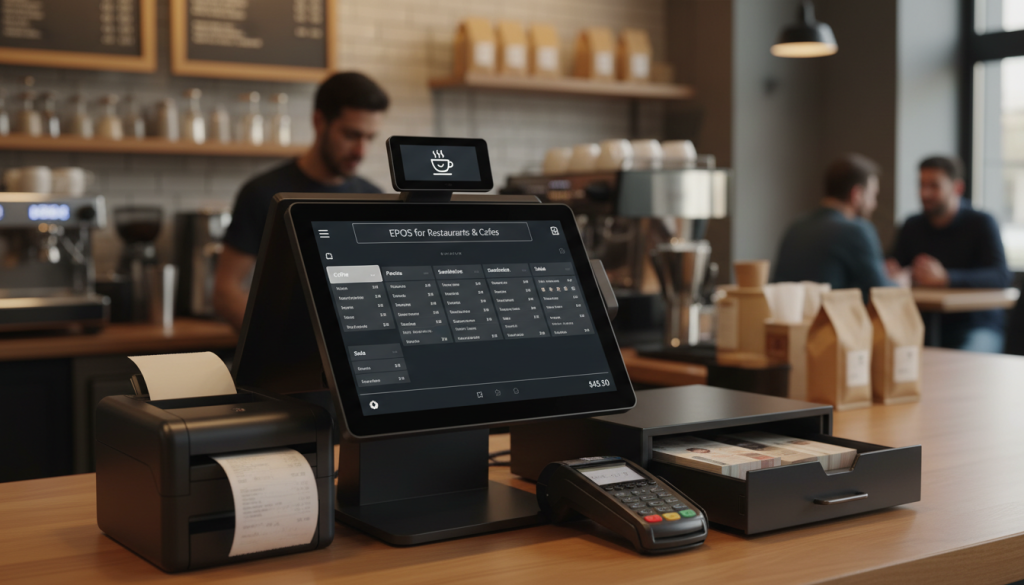
The UK hospitality industry is currently navigating a period of significant transformation. With rising operational costs and changing consumer habits, restaurant owners from London to Edinburgh are looking for ways to tighten their margins without compromising the guest experience. Central to this survival and growth strategy is a single piece of technology: the restaurant EPOS system UK operators are now adopting as their primary business engine.
Gone are the days when a Point of Sale (POS) was simply a glorified cash drawer. Today, it is the heartbeat of the restaurant, connecting the front-of-house, the kitchen, and the back-office management in one seamless loop.
Why the “UK Factor” Matters in EPOS Selection
The British hospitality landscape has unique requirements. From handling complex VAT requirements to integrating with local delivery platforms and supporting the UK’s preference for contactless and mobile payments, a generic software solution often falls short.
When looking at specialists like CubePOS, it becomes evident that a localized approach is superior. A dedicated restaurant EPOS system UK businesses can rely on ensures that the hardware is robust enough for high-traffic environments and the software is intuitive enough for a diverse workforce to master in minutes.
Streamlining Operations: From Table to Till
The primary goal of any EPOS system is to remove friction. In a busy bistro or a high-end eatery, friction manifests as lost orders, slow payment processing, or miscommunication between staff.
1. Intelligent Table Management
Modern systems allow staff to see a digital floor plan in real-time. You can track how long a table has been sitting, which courses have been served, and identify “bottlenecks” before they result in a negative review. This level of oversight is essential for maximizing “table turns” during peak Friday and Saturday night shifts.
2. Integrated Kitchen Display Systems (KDS)
The shout of a “service” bell is being replaced by the silent efficiency of a KDS. When an order is taken on a handheld tablet at the table, it is instantly routed to the correct station in the kitchen. This eliminates the need for paper tickets that can get lost or stained, ensuring that the restaurant EPOS system UK chefs prefer is one that provides clarity under pressure.
3. Real-Time Reporting and Analytics
Data is the most undervalued asset in hospitality. By using a sophisticated POS, managers can access “X” and “Z” reports instantly, but more importantly, they can track labor costs against sales. If you know your peak hours with 99% accuracy, you can staff your floor more effectively, saving thousands of pounds in unnecessary wages over the course of a year.
The Human Element: Enhancing, Not Replacing, Service
There is often a fear that “more tech” means “less soul.” However, the opposite is true. By automating the administrative side of a transaction—calculating splits, processing vouchers, or checking stock levels—the staff are freed from the screen.
When a server isn’t bogged down by a slow, clunky interface, they have more time to describe the specials, recommend wine pairings, and ensure the guest feels valued. High-quality systems, such as those found at cubepos.co.uk, are designed with “minimal taps” in mind, keeping the focus on the person, not the computer.
Future-Proofing Your Business
As we look toward the future of UK dining, flexibility is key. Whether it’s integrating with third-party delivery apps to manage takeaway orders or implementing QR-code “order at table” functionality, your EPOS must be able to adapt. Investing in a professional system today isn’t just a purchase; it’s a foundation for a scalable, resilient hospitality brand.
For UK restaurateurs, the choice of technology will likely be the most important decision made this year. By prioritizing reliability, local support, and deep functional depth, you ensure that your business stays ahead of the curve in an ever-competitive market.
